
What the mountains taught me about leadership
A summer of hiking in the Dolomites, and five things it made me think about differently: direction, progress, pace, judgement and the way down.
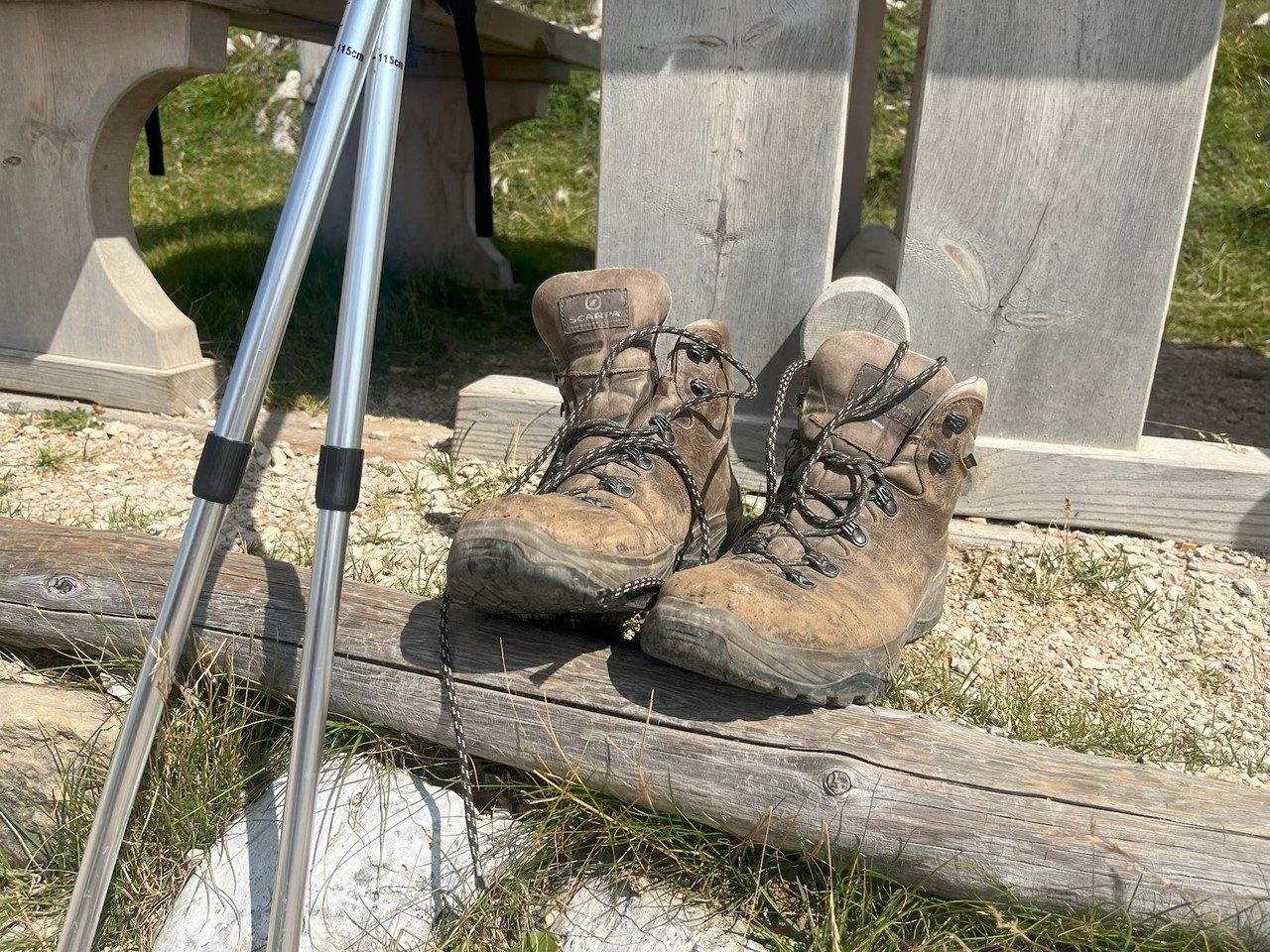
I have been lucky to take a long holiday this summer.
And, perhaps more importantly, to let go of being the person who is always in control.
For years, my days started with decisions. Teams to lead. Problems to solve. Priorities to juggle. An inbox that rarely stayed quiet for long.
So relinquishing control does not come particularly naturally to me.
This summer, though, I handed it over to my husband.
We spent several weeks on a road trip through the beautiful mountains of the French, Italian and German Alps. It was a hot summer, and we took full advantage of it: walking, cycling, exploring and, whenever we could, heading into the mountains.
When we reached the Dolomites, my husband took charge of the hiking.
He spent days researching routes and working out which ones would challenge us without being unrealistic for the time we had. He knew where we would start, where we could stop for coffee, how many huts we might reach, where we could replenish our water and where the more difficult sections would be.
He knew the route long before I even knew where the path began.
All I had to do was put my poles in my hands and walk.
And somewhere on a rough section of a climb, concentrating hard on where I was putting my feet, something struck me.
We prepare more carefully for a good hike than we sometimes prepare for a major project at work.
We check the route. We look at the weather. We understand the terrain. We work out what we need to carry. We ask people who have done it before. We look for signs along the way to make sure we are still heading in the right direction.
And when conditions change, we adapt.
The mountains have a wonderful way of making these principles impossible to ignore.
Here are five things my hikes in the Dolomites made me think about differently.
01Direction: clarity beats speed
You need to know where you are going before you can work out how to get there.
Before a hike, you look at the map. You check the weather. You understand the distance and the terrain. You decide where to start, which route to take, what you need to carry and roughly how long it should take.
You don't wake up one morning and decide to climb Everest.
You prepare. You research. You build the right skills. You get the right equipment. You learn from people who have done it before.
And once you are on the trail, there are constant signals telling you whether you are still on the right track.
So why do we sometimes approach business projects differently?
How often do teams start with enthusiasm and speed before they have agreed exactly where they are going?
A clear objective, a route and some shared understanding of what success looks like can feel slower at the beginning.
In reality, it can save an enormous amount of time later.
Clarity beats speed.
02Progress is rarely linear
One of our hiking days was around 22 kilometres.
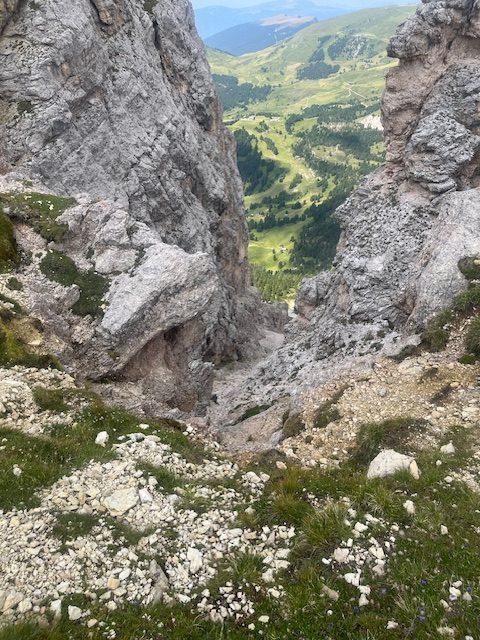
We had a beautiful summit in mind, but the route certainly wasn't a straight line upwards.
We climbed. We descended. We crossed grass, rocks and increasingly difficult terrain. We zig-zagged around obstacles and sometimes walked away from the summit in order to eventually get closer to it.
There were moments when it felt as though we weren't making progress at all.
But we were.
Some sections were about gaining height. Others were about navigating around something that couldn't be crossed directly.
It reminded me of so many business projects.
There are periods when everyone is working incredibly hard but the outcome isn't yet visible.
Foundations are being built. Problems are being solved. Information is being gathered. People are learning. Decisions are being made that will only create visible progress much later.
From the outside, it can look like nothing is happening.
Then suddenly, the foundations are strong enough and progress becomes visible.
Not every step has to move you visibly closer to the summit. Some steps are there to make the next ones possible.
03People: leadership is about pace, not pressure
Some hikes you can do alone.
Others are better with the right people.
I was particularly lucky to have my husband with me.
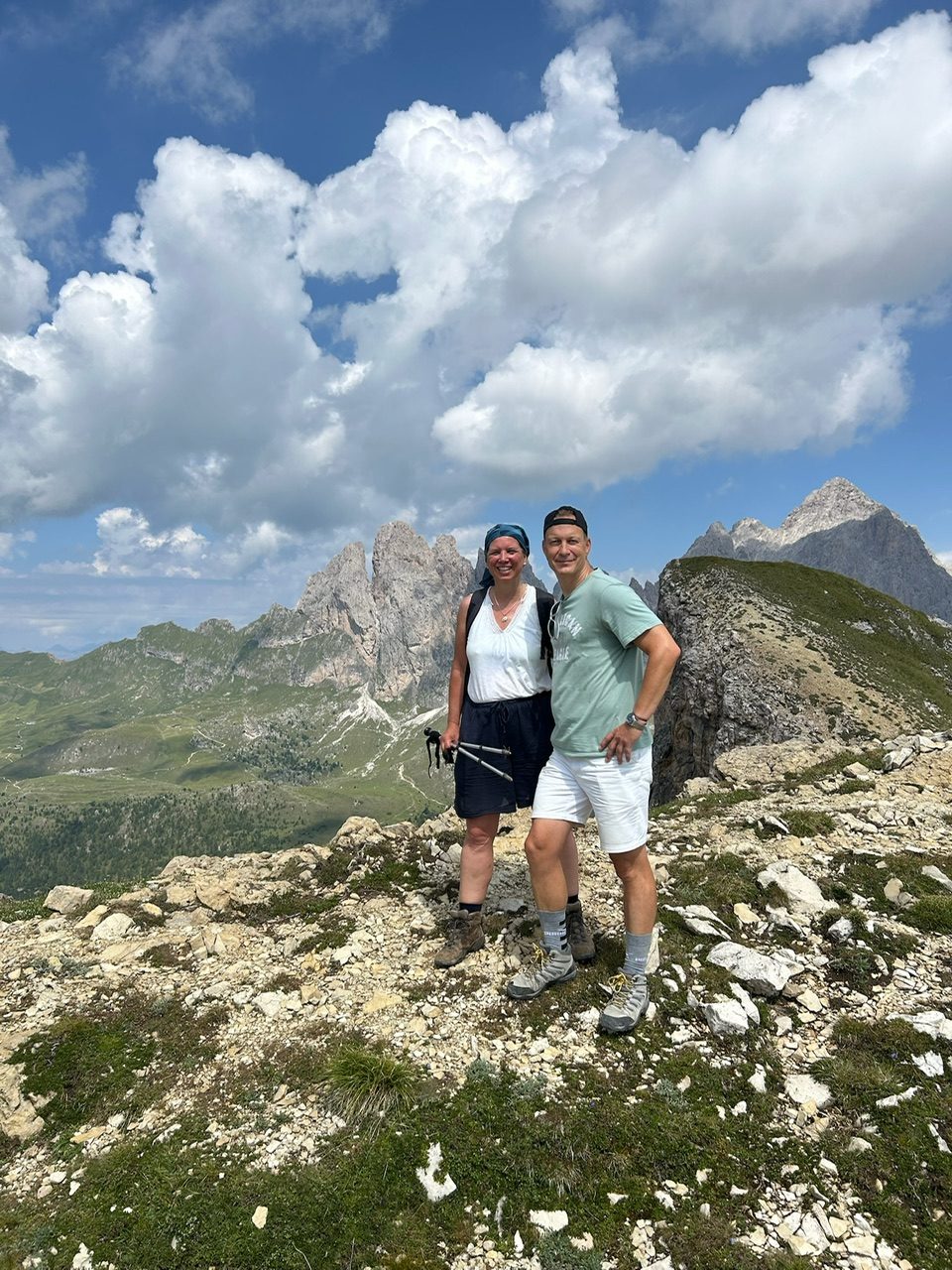
He didn't just plan the route. He carried much of the shared load: water, snacks, sun cream and everything else we needed. He checked that I was doing alright and had enough energy for the harder sections.
And, importantly, he didn't make the hike about how quickly he could get to the top.
Because when you are part of a team, the pace isn't determined by the fastest person.
It is determined by what the whole team can sustain.
That feels remarkably relevant to leadership.
Choosing the right people for a project matters. So does understanding their skills, their capacity and what support they need.
If everyone is working excessively long days, skipping breaks and running on empty, you may create short-term speed.
But eventually quality suffers. Decisions deteriorate. Motivation drops. People disengage.
A strong team isn't one that reaches the summit fastest.
It is one that reaches it together, with enough energy to get back down.
Leadership is about pace, not pressure.
04Decision-making: never rely on one source of information
I became strangely excited by signposts.
After walking for a long time without seeing one, you start wondering whether you took the wrong turn.
Then suddenly there it is.
A small sign confirming that you are heading in the right direction.
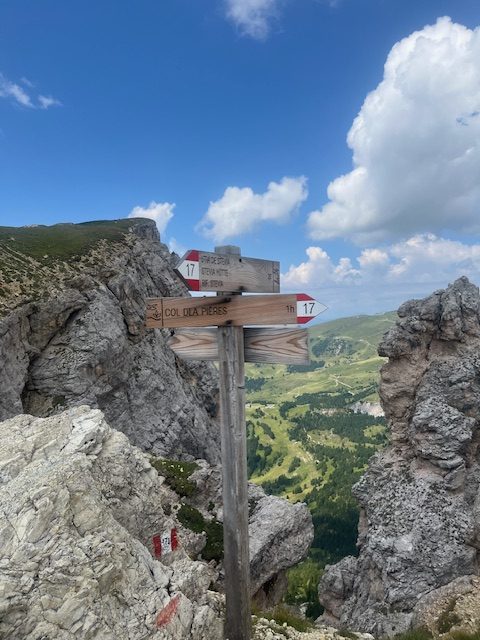
The relief is disproportionate to the size of the sign.
And sometimes there was no phone signal. No app to check. No convenient blue dot telling us exactly where we were.
We had to read the terrain, the map and the signs around us.
That made me think about how we make decisions at work.
Technology is incredibly useful. Data, dashboards, AI and digital tools can help us make better decisions.
But they are tools, not substitutes for judgement.
Good leaders need multiple sources of information: data, experience, observation, people on the ground and sometimes simply the ability to recognise that something doesn't feel right.
And when you don't know, ask someone who has done it before.
Hikers are remarkably generous with their knowledge. People share routes, warnings, recommendations and lessons from their own experience.
Business could probably benefit from a little more of that spirit too.
Good judgement comes from combining information, experience and curiosity.
05The way down: experience compounds
Perhaps my biggest lesson came from thinking about what happens after you reach the summit.
The obvious goal of a hike is to get to the top.
But the hike isn't finished when you arrive.
You still have to get down.
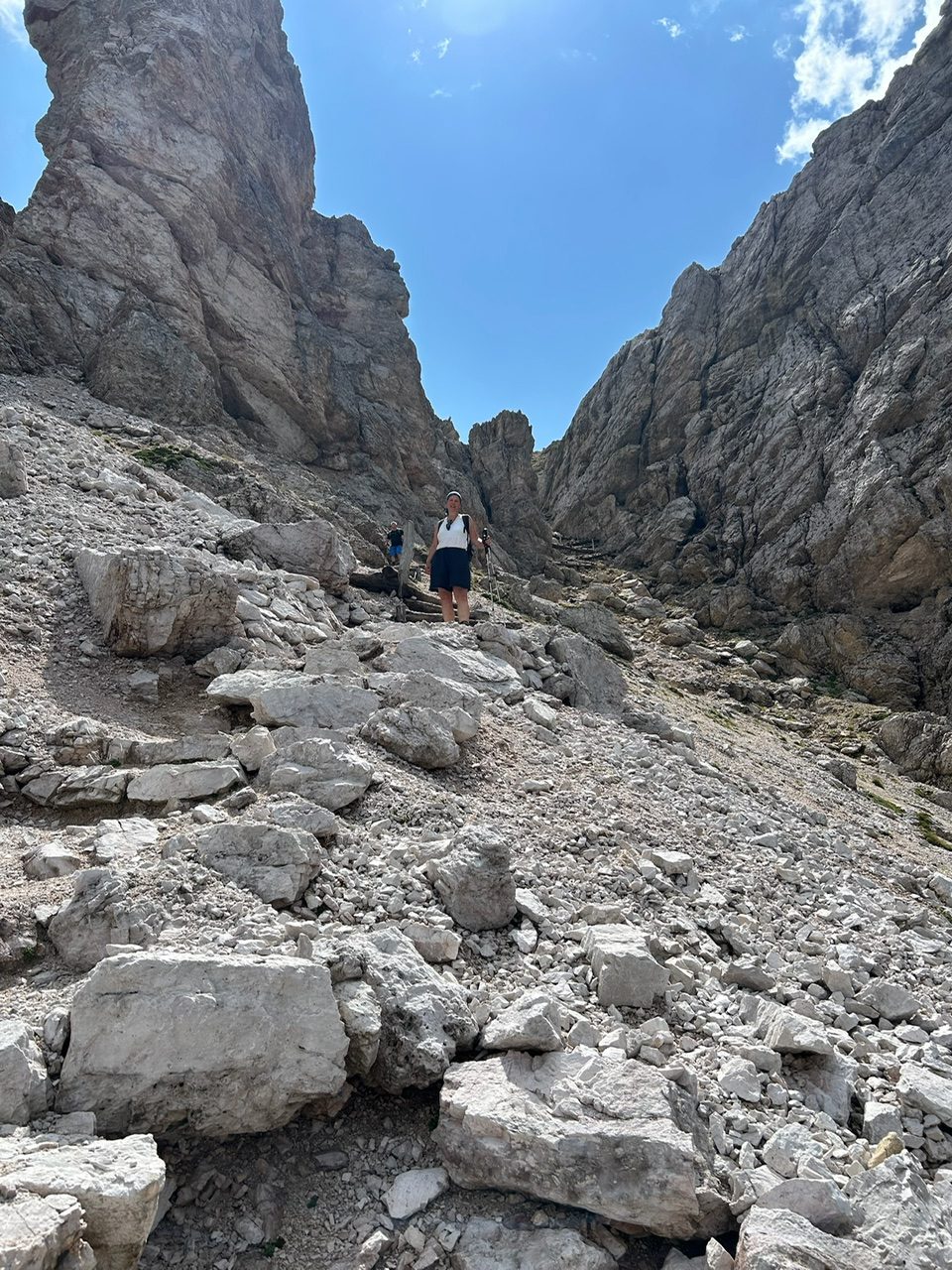
And descending can require just as much concentration, sometimes more.
A study of fatal accidents in high-altitude mountaineering in the Swiss Alps between 2009 and 2021 found that almost two-thirds of fatal falls occurred during descent. The researchers suggest fatigue and reduced focus after reaching the summit as possible contributing factors.
There is a powerful business parallel here.
Projects don't fail only because teams cannot reach the target.
Sometimes they fail because people become tired near the end. Deadlines create pressure. Quality checks are skipped. Corners are cut. People assume that because the difficult part is over, the job is essentially done.
But experience teaches you to respect the last part of the journey too.
And experience compounds.
You cannot improvise experience when you suddenly need it.
If your team doesn't have a particular skill, bring someone in who does. Find the expert. Hire the guide. Ask the person who has navigated that terrain before.
There is no prize for making every mistake yourself.
And then there is gratitude
One of the things I loved most about hiking in the Dolomites was noticing how many people had made the journey easier for those coming after them.
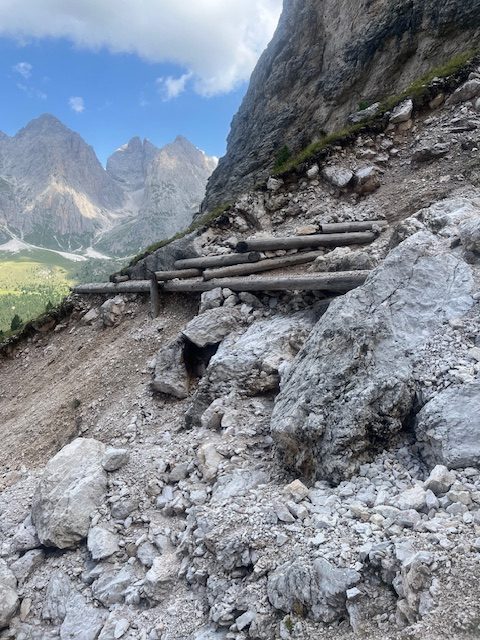
The people who built the bridges.
The people who created steps.
The people who fixed protective ropes.
The people who marked the trails.
The pioneers who opened the routes in the first place.
Most of us walk on paths we didn't create.
And that made me think about leadership too.
We all benefit from people who came before us. Someone who taught us. Someone who gave us an opportunity. Someone who shared their experience. Someone who left behind a better process, a clearer route or simply a piece of advice at exactly the right moment.
And perhaps there is a responsibility to do the same for the people coming behind us.
Share what you have learned.
Leave the path a little clearer.
Make the journey easier for the next person.
Back to the beginning
I started this summer by letting go of control.
I let someone else plan the route.
I followed.
I trusted.
And I walked.
Somewhere between the coffee stops, the steep climbs, the wrong turns, the signposts, the zig-zags and the summits, I realised that I wasn't really giving up control.
I was practising something different.
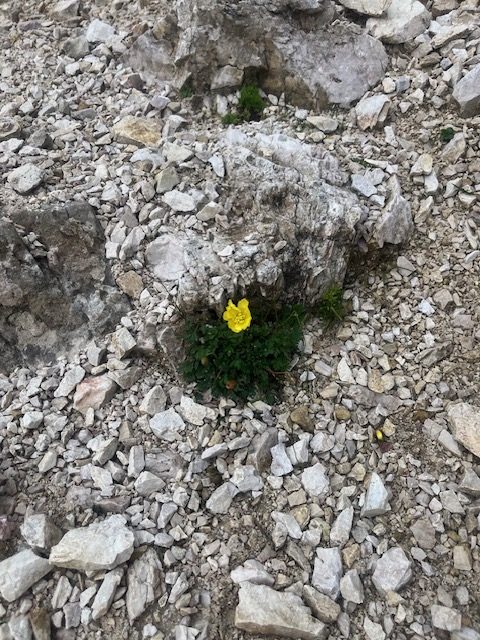
Trusting the preparation. Trusting the route. Trusting the people around me. And knowing when to lead, when to follow and when to ask for help.
I love mountains.
I love a good hike.
And perhaps one of the reasons I love them so much is that they create the kind of space where thinking becomes easier.
Somewhere between meditation and introspection, walking gives me room to notice things that are harder to see when life is moving quickly.
This summer, the mountains reminded me that leadership and hiking have more in common than I had realised.
There is a route.
There are obstacles.
There are people beside you.
There are moments when you need to move faster and others when you need to slow down.
And ultimately, the goal isn't simply to reach the summit.
It is to make the journey well.
I'm looking forward to many more paths, mountains and lessons ahead.